
Fabric Ducts North Carolina | Textile Air Distribution | DUCTECOL
>>
Fabric Ducts North Carolina — North Carolina | DUCTecoL
Regional Overview & HVAC Challenges
North Carolina represents the fastest-growing manufacturing region in the United States, particularly for automotive and textile production. This 10-state region experiences hot, humid summers (85-95°F with 70-90% humidity) combined with mild winters, creating a climate profile that demands year-round dehumidification and cooling capacity. The combination of high temperatures, moisture, and heavy industrial activity creates extreme HVAC demands that traditional rigid ductwork struggles to meet reliably.
North Carolina’s Research Triangle—anchoring one of the world’s densest biotech and pharmaceutical clusters with Biogen, Pfizer, Merck, and over 700 life sciences companies between Raleigh, Durham, and Chapel Hill—creates sustained demand for cGMP-validated cleanroom air distribution where textile ducts outperform metal systems in particulate control while reducing installation costs by up to 50%. The state’s diverse climate, from the humid subtropical Piedmont averaging 80%+ summer humidity to North Carolinas of Asheville experiencing 40°F temperature swings in a single day, challenges HVAC engineers with varied requirements within a single state. North Carolina’s massive food processing sector—Smithfield Foods’ pork operations in Tar Heel (the world’s largest pork processing facility), Butterball turkey processing in Mount Olive, and Pepsi bottling in Charlotte—alongside the growing Charlotte financial data center corridor hosting Bank of America and Wells Fargo server farms, drives diverse demand for DUCTecoL’s antimicrobial and precision-grade textile systems.
North Carolina’s rapid industrial expansion, driven by favorable business climates and lower operating costs, has created unprecedented demand for reliable, efficient HVAC solutions. DUCTecoL textile ducts are revolutionizing climate control in North Carolina manufacturing, offering unmatched humidity management and energy efficiency in hot-humid environments.
- Humidity Challenge: Dewpoint control critical in manufacturing environments
- Corrosion Resistance: High salt content near coastal areas demands corrosion-resistant materials
- Energy Efficiency: Extreme cooling loads require optimized duct performance
- Indoor Air Quality: Textile fiber filter properties improve air quality for workers
Key Industries Served
- Automotive Manufacturing: 50+ facilities producing vehicles and components across Tennessee, Alabama, Kentucky, and North Carolina
- Textile Production: Historic textile hub with modernized mills requiring precise climate control for fiber processing
- Food Processing: Poultry processing (Georgia, Arkansas), seafood (North Carolina), dairy and produce facilities
- Aerospace Components: Growing aerospace supply chain in North Carolina and Tennessee
- Electronics Manufacturing: Semiconductor assembly and component manufacturing
DUCTecoL Advantages for North Carolina
- Corrosion-resistant coating protects against salt spray near coastal areas
- Maintains 15-20°F temperature differential in cooling systems for maximum efficiency
- Built-in acoustic properties reduce equipment noise critical in open manufacturing floors
- Improves indoor air quality through micro-fiber filtration (captures 10-100 micron particles)
- 30-35% more efficient than traditional round ducts in high-humidity applications
Technical Specifications for North Carolina Applications
| Specification | North Carolina Standard | Benefit |
|---|---|---|
| Moisture Vapor Transmission Rate (MVTR) | <0.5 grains/hour/SF | Prevents humid air penetration into insulation |
| Salt Spray Resistance | ASTM B117 1000 hours | Protects coastal facilities from corrosion |
| Temperature Control Precision | ±2°F in active cooling | Critical for textile and electronics manufacturing |
| Acoustic Performance | 25+ dB reduction at speech frequencies | OSHA compliance for worker hearing protection |
| Cleanability | Food-grade sanitization compatible | Meets USDA and FDA requirements for food facilities |
North Carolina Regulations & Compliance
- ASHRAE 62.1 IAQ Standards: Full compliance with indoor air quality requirements
- USDA/FDA Food Processing: NSF International certified for food production facilities
- OSHA Noise Regulations: Acoustic design meets 90 dB worker exposure limits
- State Energy Codes: Exceeds efficiency requirements in all 10 states
- Coastal Corrosion Standards: Exceeds C5-M salt spray resistance requirements
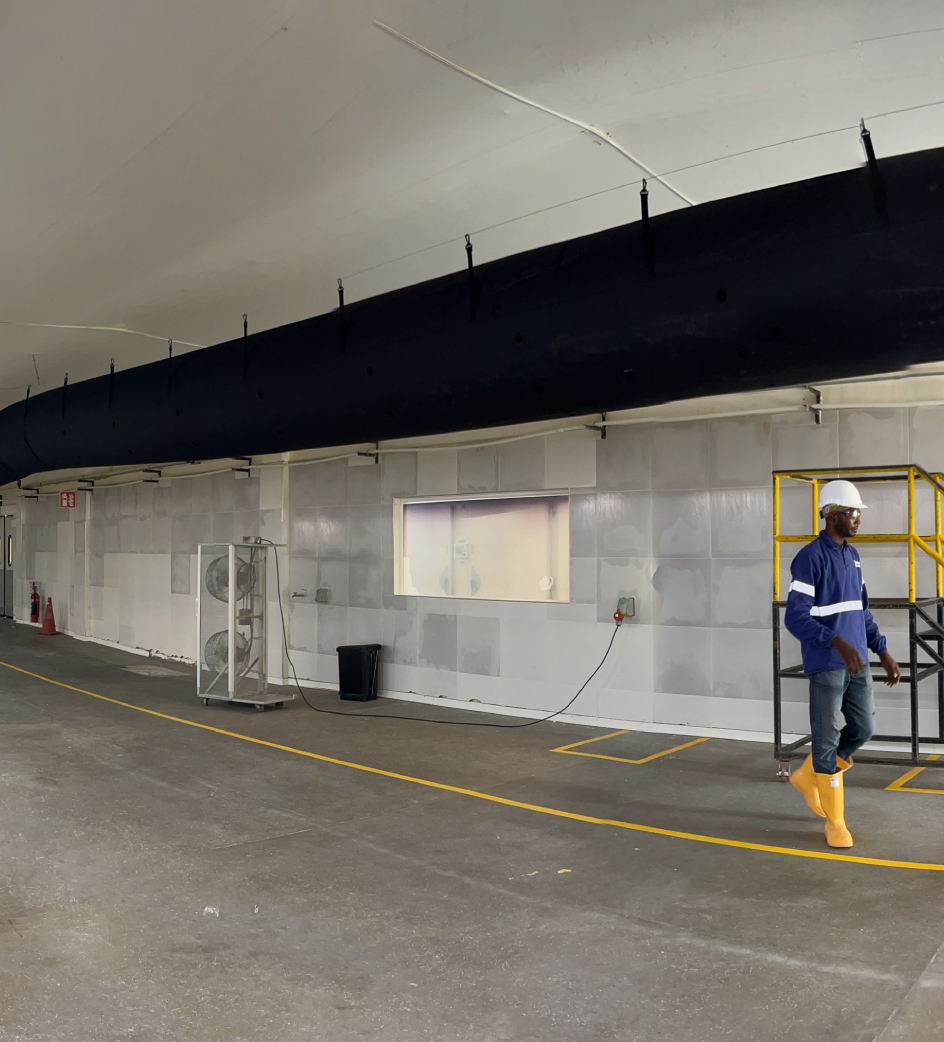
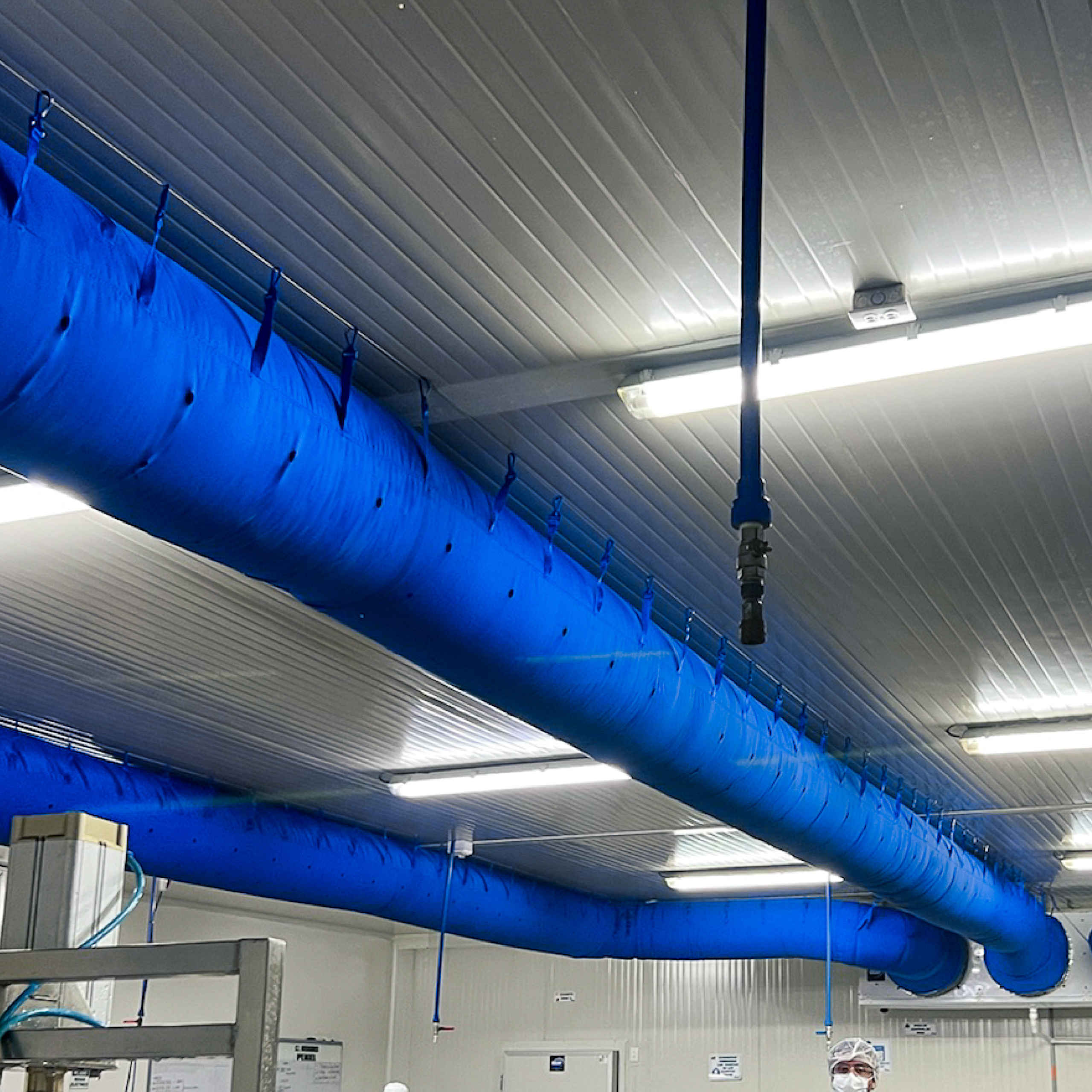
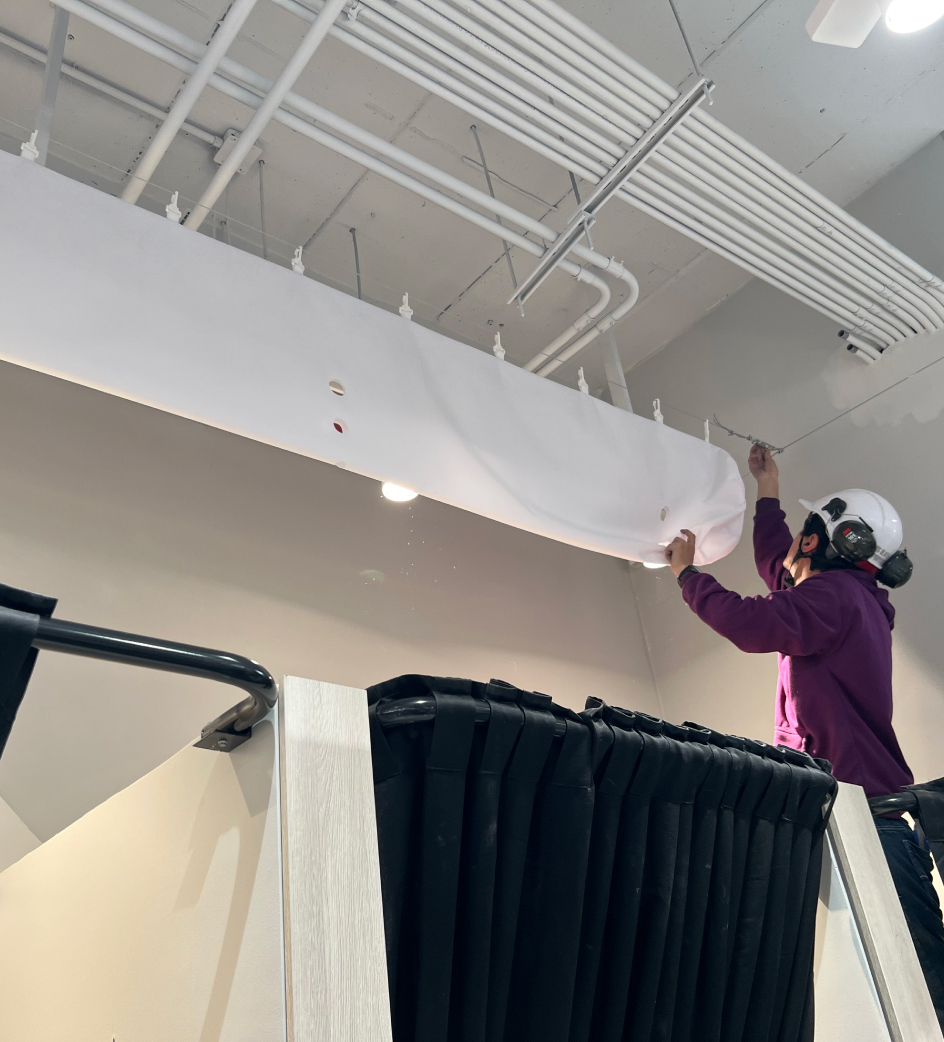
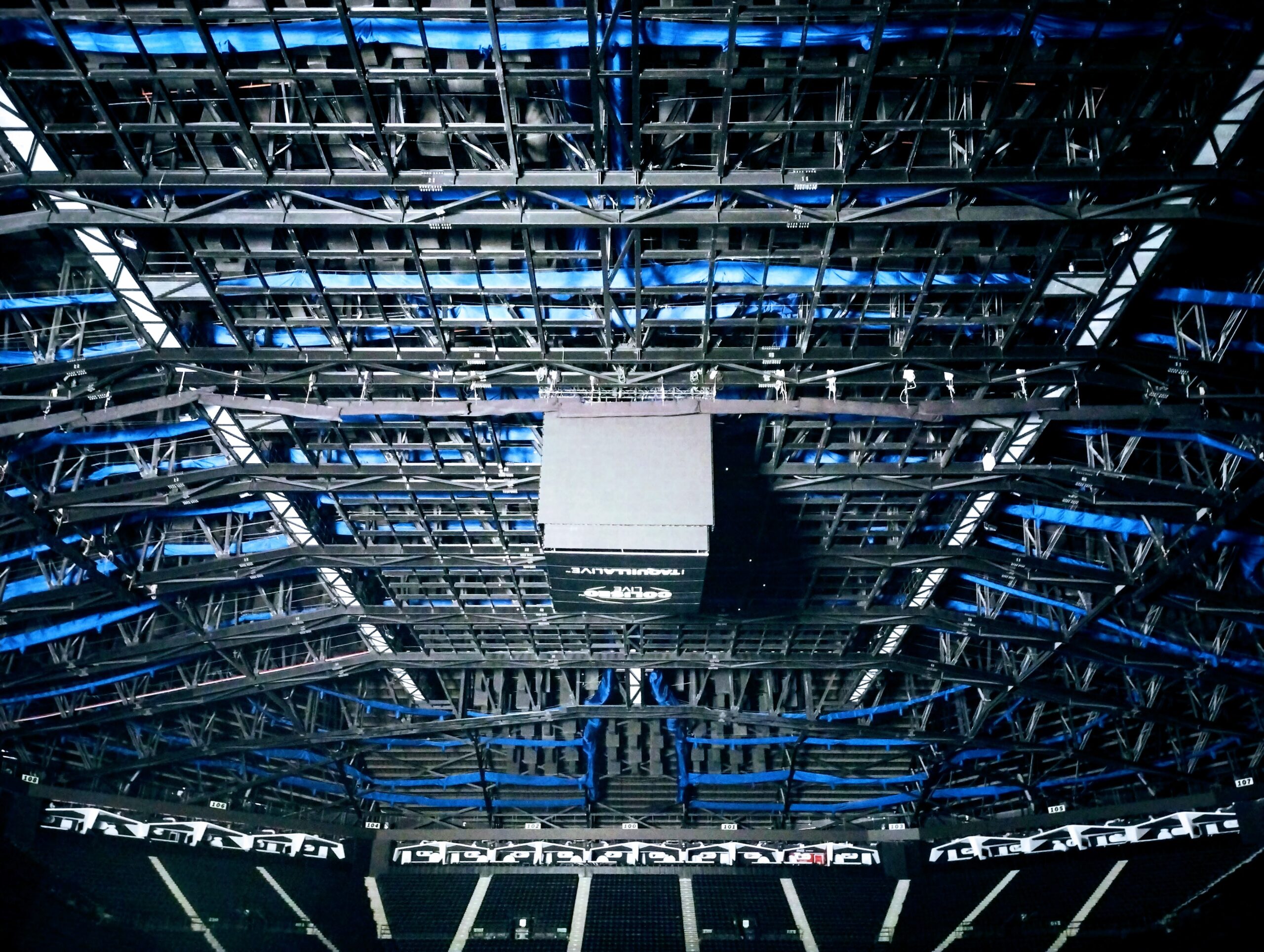
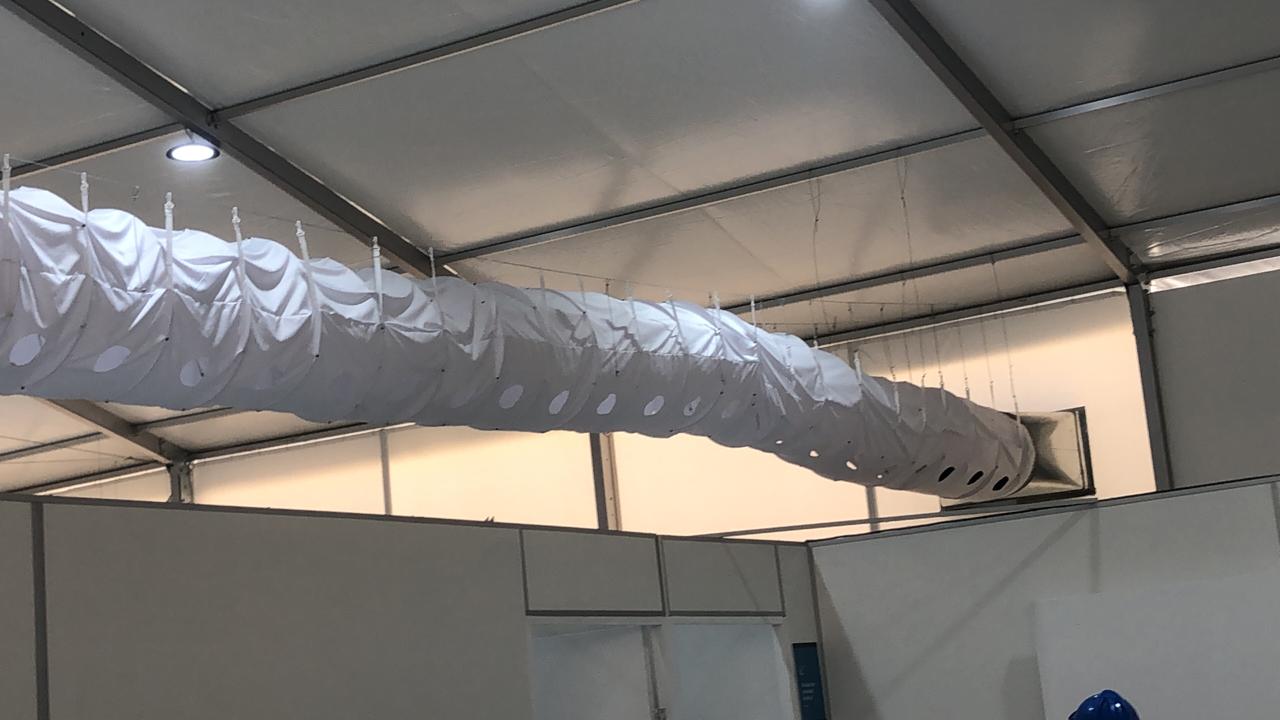
DUCTecoL Textile Duct Applications

Frequently Asked Questions – North Carolina
How do textile ducts serve North Carolina’s Research Triangle biotech cluster?
Biogen, Pfizer, Merck, and 700+ life sciences companies between Raleigh-Durham-Chapel Hill require cGMP cleanrooms. DUCTecoL delivers ISO 14644 compliance with 50% lower installation costs than metal—essential for North Carolina’s rapidly expanding pharmaceutical manufacturing sector.
Are DUCTecoL ducts used in North Carolina’s massive food processing facilities?
Smithfield Foods’ Tar Heel plant (the world’s largest pork processor) and Butterball in Mount Olive require USDA-compliant washable systems. DUCTecoL’s antimicrobial fabric handles North Carolina’s 80%+ humidity while meeting daily sanitation requirements.
How do textile ducts handle North Carolina’s 40°F daily temperature swings?
Asheville’s mountain climate can swing 40°F in a single day, causing metal ducts to pop and leak at joints. DUCTecoL’s flexible fabric absorbs thermal cycling silently, maintaining airtight performance across North Carolina’s diverse climate zones from coast to mountains.
Optimize Your North Carolina Manufacturing HVAC
DUCTecoL specialists are ready to assess your automotive, textile, or food processing facility’s climate control needs. We provide detailed energy modeling and ROI projections for North Carolina operations.
DUCTecoL International
📞 +57 301 4529090
📧 sales@ductecol.com
📍 Available: Atlanta, Charlotte, Nashville, Memphis