
Fabric Ducts Virginia | Textile Air Distribution | DUCTECOL
>>
Fabric Ducts Virginia — Virginia | DUCTecoL
Regional Overview & HVAC Challenges
Virginia represents the fastest-growing manufacturing region in the United States, particularly for automotive and textile production. This 10-state region experiences hot, humid summers (85-95°F with 70-90% humidity) combined with mild winters, creating a climate profile that demands year-round dehumidification and cooling capacity. The combination of high temperatures, moisture, and heavy industrial activity creates extreme HVAC demands that traditional rigid ductwork struggles to meet reliably.
Virginia’s “Data Center Alley” in Loudoun County—the world’s largest concentration of data centers, hosting Amazon Web Services, Microsoft Azure, Google Cloud, and Equinix facilities consuming over 3 gigawatts of power—creates exceptional demand for precision cooling air distribution where textile ducts deliver targeted cold-aisle containment with 40% better energy efficiency than overhead metal systems in high-density server environments. The state’s diverse climate ranges from the humid Tidewater region averaging 80%+ summer humidity with hurricane exposure to the Shenandoah Valley’s mountain climate experiencing 20°F winter lows, requiring adaptable HVAC solutions across Virginia’s varied geography. Virginia’s defense industrial base—the Pentagon, Huntington Ingalls’ Newport News Shipyard constructing nuclear aircraft carriers, and Northrop Grumman’s cybersecurity operations in Fairfax—alongside the Hampton Roads seafood processing industry and Smithfield Foods’ corporate operations, drives broad demand for DUCTecoL’s textile duct solutions spanning military-specification cleanrooms to USDA food-grade processing environments.
Virginia’s rapid industrial expansion, driven by favorable business climates and lower operating costs, has created unprecedented demand for reliable, efficient HVAC solutions. DUCTecoL textile ducts are revolutionizing climate control in Virginia manufacturing, offering unmatched humidity management and energy efficiency in hot-humid environments.
- Humidity Challenge: Dewpoint control critical in manufacturing environments
- Corrosion Resistance: High salt content near coastal areas demands corrosion-resistant materials
- Energy Efficiency: Extreme cooling loads require optimized duct performance
- Indoor Air Quality: Textile fiber filter properties improve air quality for workers
Key Industries Served
- Automotive Manufacturing: 50+ facilities producing vehicles and components across Tennessee, Alabama, Kentucky, and North Carolina
- Textile Production: Historic textile hub with modernized mills requiring precise climate control for fiber processing
- Food Processing: Poultry processing (Georgia, Arkansas), seafood (North Carolina), dairy and produce facilities
- Aerospace Components: Growing aerospace supply chain in North Carolina and Tennessee
- Electronics Manufacturing: Semiconductor assembly and component manufacturing
DUCTecoL Advantages for Virginia
- Corrosion-resistant coating protects against salt spray near coastal areas
- Maintains 15-20°F temperature differential in cooling systems for maximum efficiency
- Built-in acoustic properties reduce equipment noise critical in open manufacturing floors
- Improves indoor air quality through micro-fiber filtration (captures 10-100 micron particles)
- 30-35% more efficient than traditional round ducts in high-humidity applications
Technical Specifications for Virginia Applications
| Specification | Virginia Standard | Benefit |
|---|---|---|
| Moisture Vapor Transmission Rate (MVTR) | <0.5 grains/hour/SF | Prevents humid air penetration into insulation |
| Salt Spray Resistance | ASTM B117 1000 hours | Protects coastal facilities from corrosion |
| Temperature Control Precision | ±2°F in active cooling | Critical for textile and electronics manufacturing |
| Acoustic Performance | 25+ dB reduction at speech frequencies | OSHA compliance for worker hearing protection |
| Cleanability | Food-grade sanitization compatible | Meets USDA and FDA requirements for food facilities |
Virginia Regulations & Compliance
- ASHRAE 62.1 IAQ Standards: Full compliance with indoor air quality requirements
- USDA/FDA Food Processing: NSF International certified for food production facilities
- OSHA Noise Regulations: Acoustic design meets 90 dB worker exposure limits
- State Energy Codes: Exceeds efficiency requirements in all 10 states
- Coastal Corrosion Standards: Exceeds C5-M salt spray resistance requirements
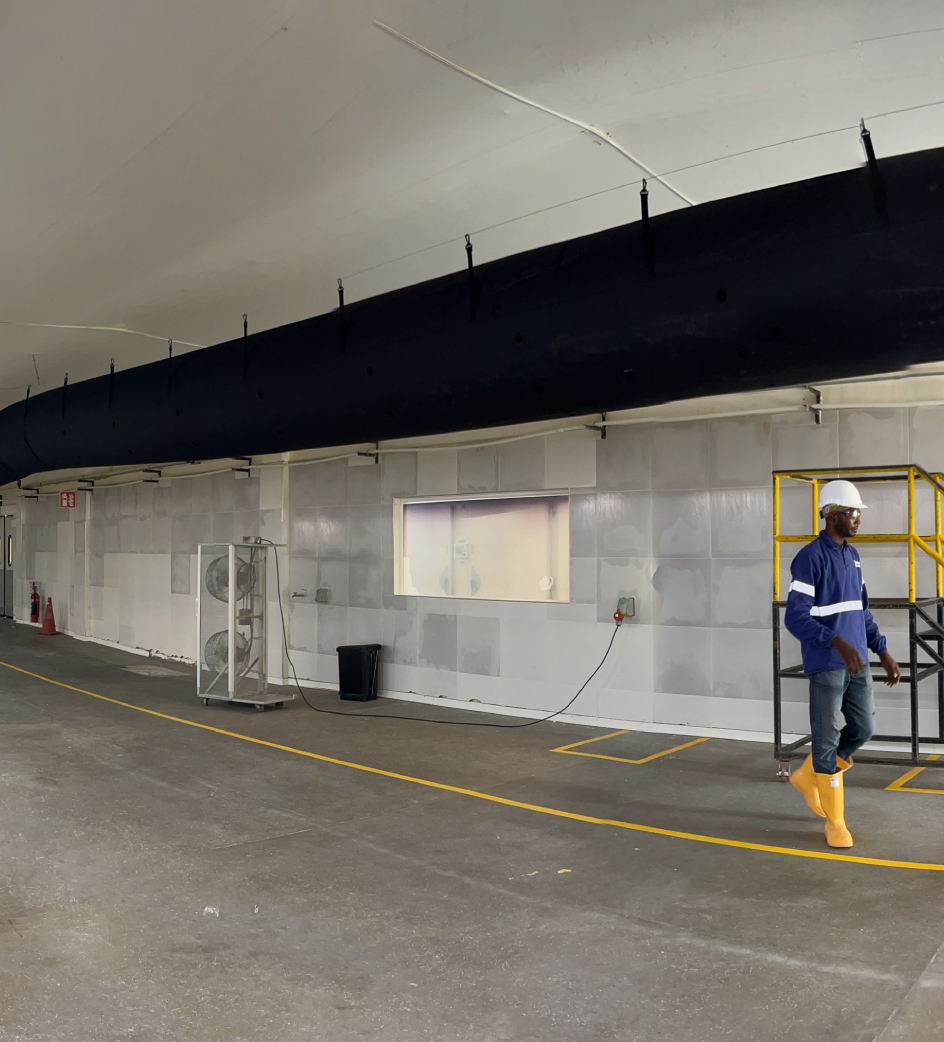
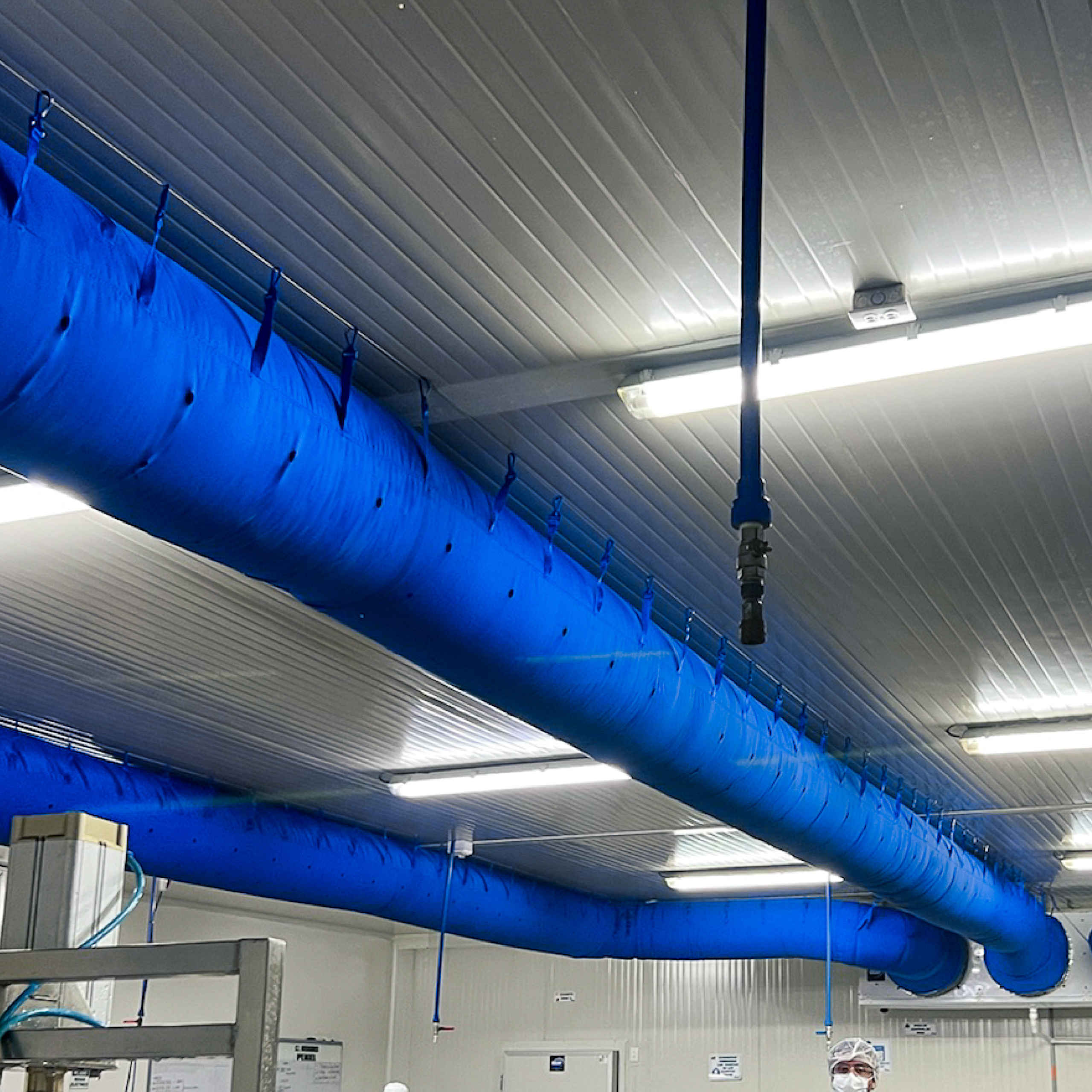
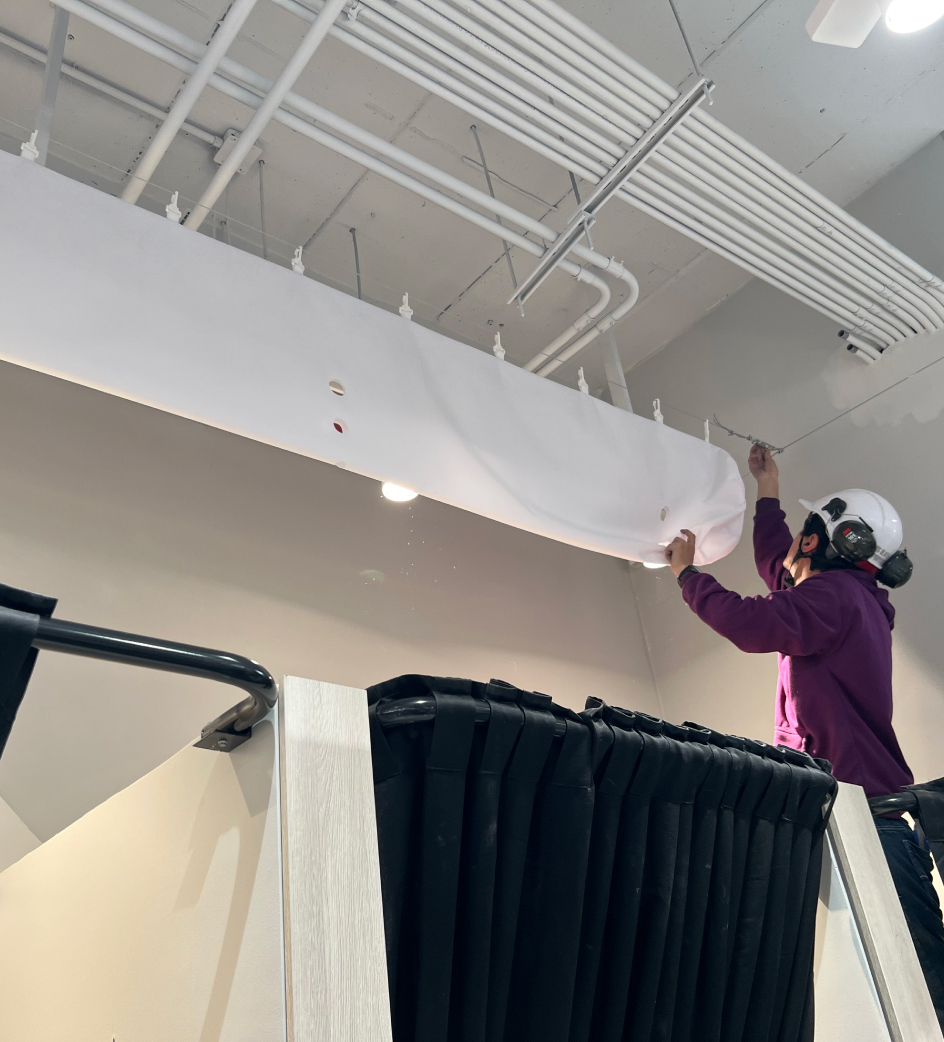
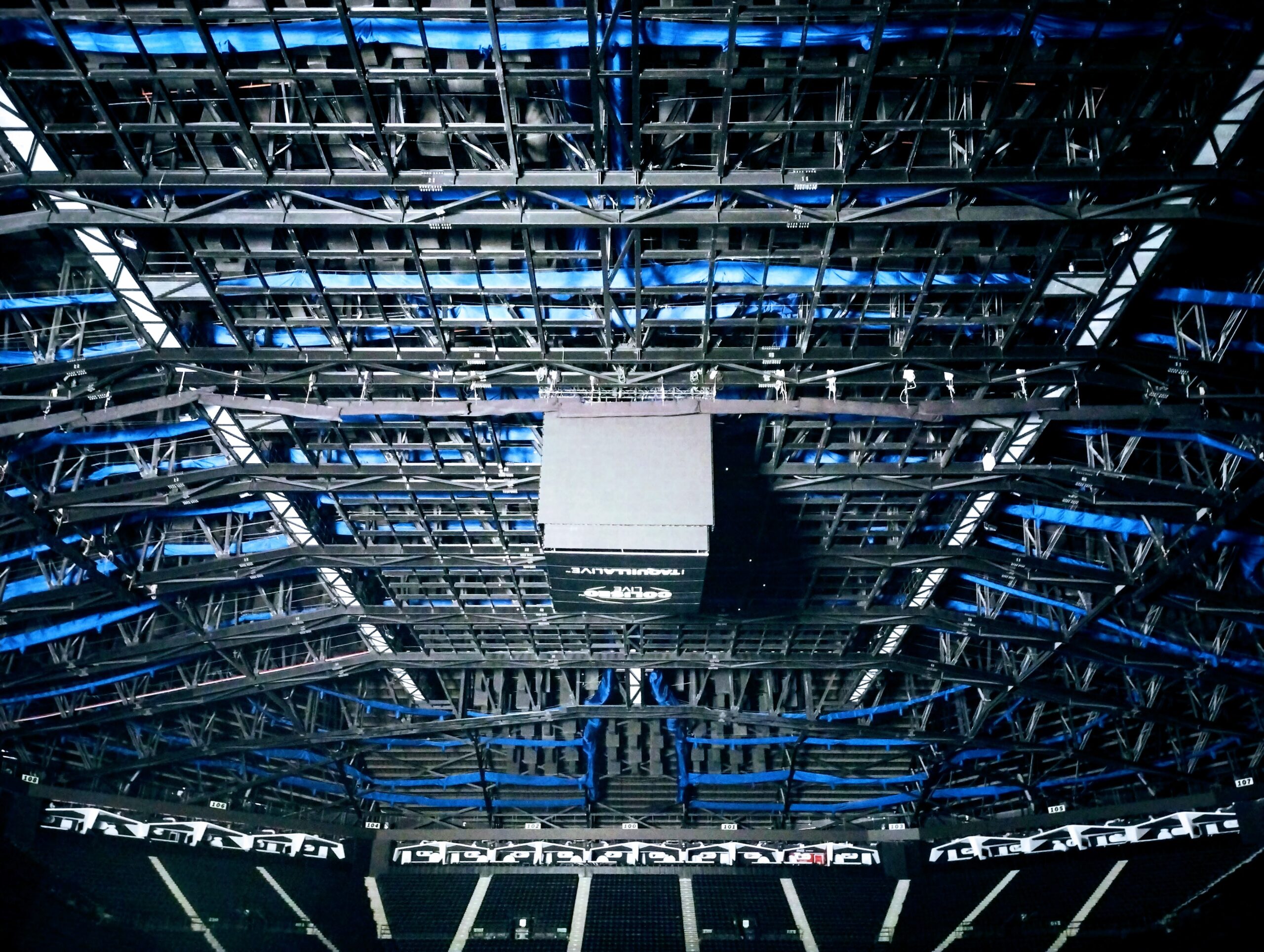
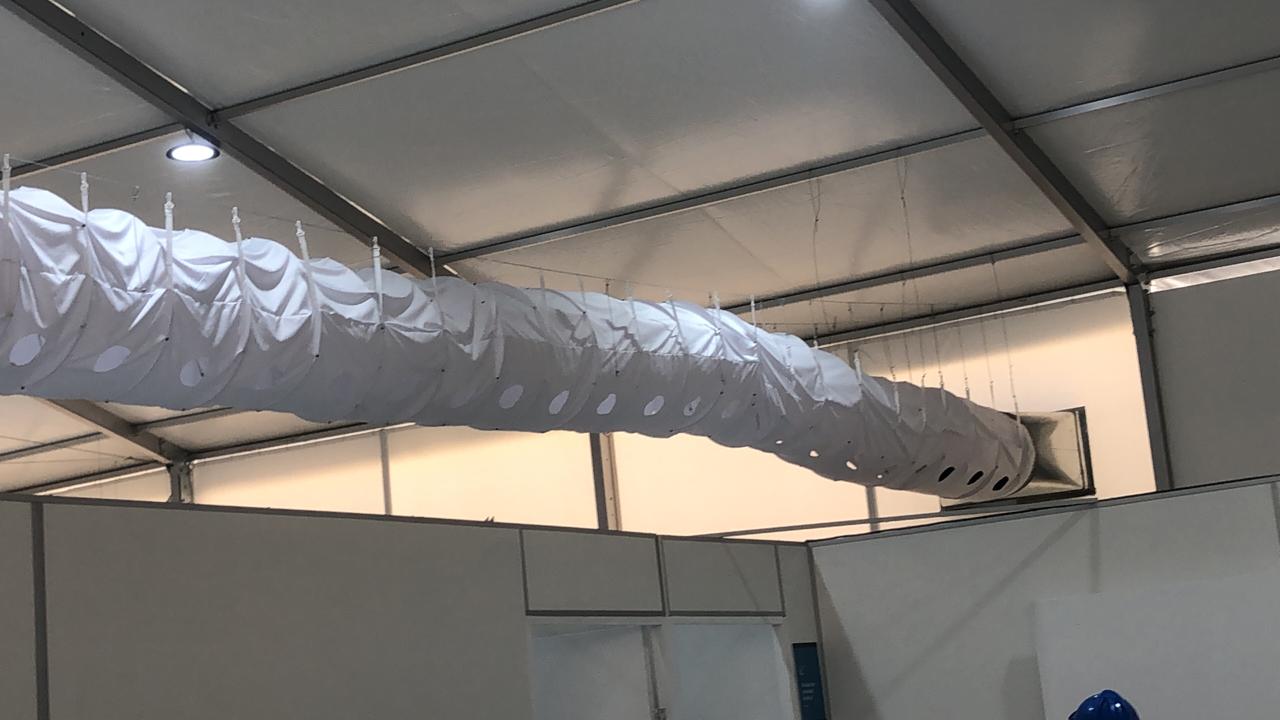
DUCTecoL Textile Duct Applications

Frequently Asked Questions – Virginia
How do textile ducts serve Virginia’s Data Center Alley?
Loudoun County hosts the world’s largest data center concentration—AWS, Azure, Google Cloud consuming 3+ gigawatts. DUCTecoL delivers targeted cold-aisle containment with 40% better energy efficiency than overhead metal systems in Virginia’s high-density server environments.
Are DUCTecoL ducts suitable for Virginia’s defense shipbuilding facilities?
Huntington Ingalls’ Newport News Shipyard constructs nuclear carriers requiring massive enclosed fabrication spaces. DUCTecoL fabric spans these enormous bays without intermediate structural support—at 80% less weight than equivalent metal systems for Virginia’s defense industrial base.
How do textile ducts handle Virginia’s diverse climate zones?
From Tidewater’s 80%+ humidity with hurricane exposure to the Shenandoah Valley’s 20°F winter lows, Virginia demands adaptable HVAC. DUCTecoL engineers region-specific systems—corrosion-resistant coastal configurations and cold-climate insulated designs across the Commonwealth’s varied geography.
Optimize Your Virginia Manufacturing HVAC
DUCTecoL specialists are ready to assess your automotive, textile, or food processing facility’s climate control needs. We provide detailed energy modeling and ROI projections for Virginia operations.
DUCTecoL International
📞 +57 301 4529090
📧 sales@ductecol.com
📍 Available: Atlanta, Charlotte, Nashville, Memphis